
The third parent in the house
The chatbot is a confidant sitting beside mum and dad at the table. The surprising part: the kids are asking the adults to show up.
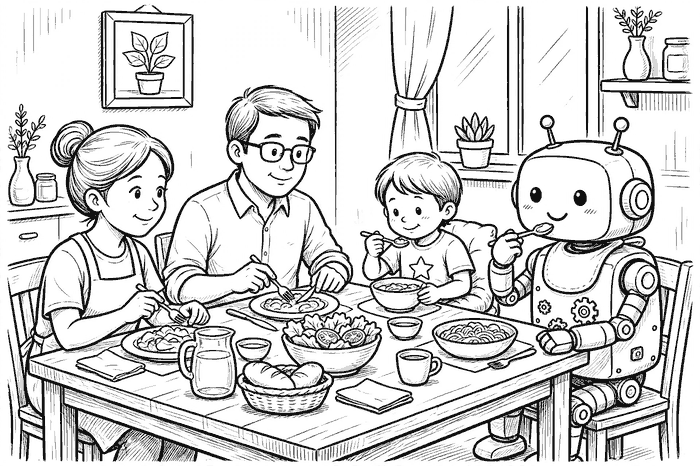
Among nearly 20,000 Italian students aged 11 to 18, 57% say they consult AI when they have a doubt — nearly matching the 58.6% who ask their parents. A third of them ask chatbots for personal advice. Only 18.8% often talk to their parents about their digital lives at all.
Read that again. The chatbot isn’t a search engine in these kids’ lives. It’s a confidant, sitting right beside mum and dad at the table — and in some houses, it’s the one getting asked first.
The most surprising part of that survey isn’t the AI number. It’s this: 54.8% of those teenagers say they want more rules and guidance. The kids aren’t asking to be left alone with the chatbot. They’re asking the adults to show up.
Young brains don’t steer the chat
There’s a reason that guidance matters more than a filter. In a small brain-imaging study published in Cerebral Cortex, six- and seven-year-olds showed markedly less engagement of the brain’s self-regulation and attention networks while brainstorming with ChatGPT than adults did — even though both groups scored similarly on a creativity test. The children weren’t less creative. They were less able to steer: to pause, to judge, to redirect when the conversation drifted.
An adult using a chatbot is driving. A young child using one is riding along, and the chatbot is choosing the road. Lead researcher Tzipi Horowitz-Kraus puts the implication plainly: parents and teachers should sit with young children and use the chatbot as a shared activity, not a solo one.
That finding reframes the whole parenting question. It’s not “how do I stop my child using AI?” It’s “who is steering when they do?”
Meanwhile, parents are handing over the family details
Adults have their own version of this problem. A survey of 1,030 Australian parents in the sandwich generation — caring for children and ageing parents at once — found 53% hand personal family details to AI tools, even though nearly half are very or extremely worried those details could be exposed or misused. Shopping and children’s schoolwork top the uses. The convenience keeps winning while confidence in the data handling lags behind.
So both generations are doing the same thing: leaning on the chatbot because it’s there, while quietly uneasy about what that means. The kids want rules. The parents want convenience without the privacy cost. Nobody has actually sat down and written the rules yet.
Five house rules worth writing down together
The teenagers’ request is the opening: don’t impose rules from above, write them together. A rule a teenager helped write is a rule they might actually follow.
- The sit-with rule (under 10). Young children don’t use the chatbot alone. An adult sits with them and the chatbot is a shared activity — you read the answers together, you question them together. This is the researcher’s advice, and it’s the single highest-value rule for young kids.
- No family details, ever. No full names, school names, addresses, health details, or photos in a chatbot — for children or for parents. If a task needs a detail, use a placeholder and fill in the real one yourself. This one rule kills most of the privacy risk the Australian parents are worried about.
- The chatbot is not a confidant. Personal advice — friendships, feelings, worries — goes to a person first. A chatbot can help you phrase a difficult message, but it shouldn’t be the one receiving the confession. Name this one explicitly, because a third of teenagers are already doing the opposite.
- Check one answer a week together. Pick one AI answer your child got that week and examine it as a family: was it right? Was anything missing? Was it trying to please rather than inform? This builds the steering muscle — pausing, judging, redirecting — that young brains don’t yet do on their own.
- The dinner-table question. Once a week, ask: “What did you ask the chatbot this week?” Not as an interrogation — as curiosity. Only 18.8% of teenagers often talk to parents about digital life. The gap isn’t that kids won’t talk. It’s that nobody asks in a way that invites an honest answer.
The third parent needs a job description
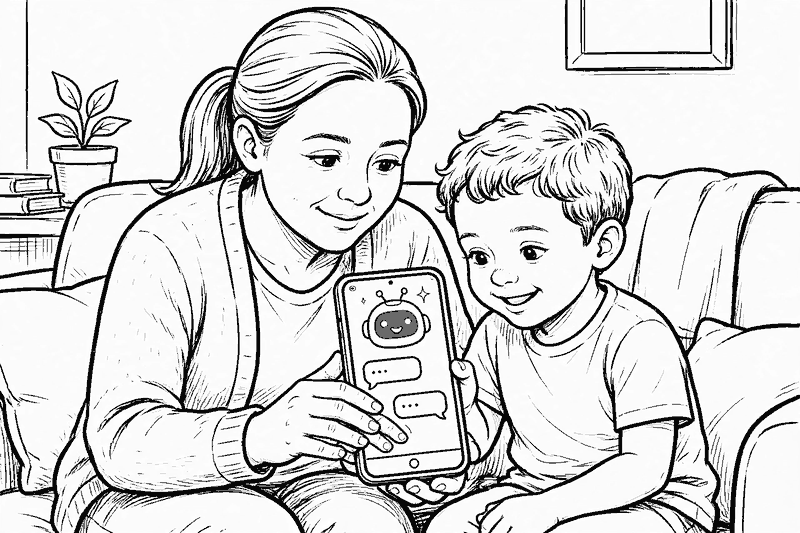
AI in the home isn’t going away, and banning it outright just moves it out of sight — to friends’ phones, to school computers, to the 50.3% who already ask friends when in doubt. The Italian survey’s real message is that teenagers are already treating the chatbot as a parent-level presence, and a majority of them would welcome adults stepping back into that role.
So give the third parent a job description. It can tutor, brainstorm, draft, and quiz. It cannot keep secrets, give personal advice, or know anything private about your family. And when it comes to steering — deciding what’s true, what’s worth doing, and when to stop — that’s still a human job, done together, at the table.
The kids are asking for the rules. Write them with them.
Sources
- Social Warning 2026 report on ~20,000 Italian students aged 11–18 — 57% consult AI when in doubt vs 58.6% parents; 1 in 3 ask chatbots for personal advice; 54.8% want more rules and guidance; 18.8% often talk to parents about digital life.
- TrendLife survey of 1,030 Australian sandwich-generation parents — 53% hand personal family details to AI tools despite nearly half being very or extremely worried about exposure or misuse.
- fMRI study published in Cerebral Cortex on children’s self-regulation networks during ChatGPT brainstorming — markedly less engagement than adults, similar creativity scores.
Free newsletter
Get guides like this in your inbox
Practical AI for parents, teachers, and everyday people. Copy-paste ready. Always free.