
Your child’s homework looks perfect. The exam says otherwise.
Homework measures what got handed in. Exams measure what stayed. A weekly system that moves AI to the side where it actually helps.
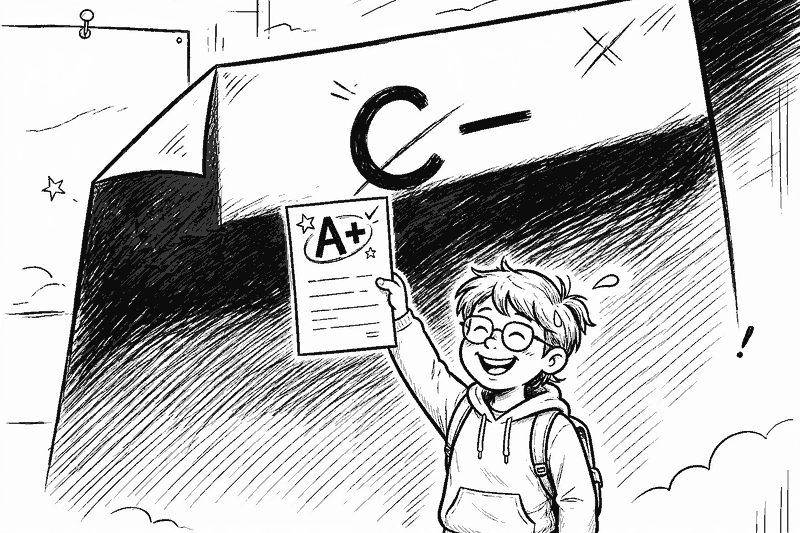
The report card looks fine. Homework is handed in on time, the grades are good, and evenings are peaceful. Then the exam comes back and it reads like a different student wrote it. If that gap feels familiar, you’re not imagining it — and you’re not alone in noticing it. The students themselves have noticed it first.
In a survey of more than 6,000 students worldwide, 82% of Indian students said they worry AI tools get their academic tasks done faster while leaving them understanding the material less. And when those same students actually want to retain something, only 17% reach for an AI summary. 42% go back to printed materials or handwritten notes. Teenagers, it turns out, can feel the difference between finishing work and learning it — even when the grades can’t.
Why homework lies and exams don’t
Homework and exams measure two different things, and AI has driven a wedge between them. Homework mostly measures completion: was something plausible handed in? An AI-written answer passes that test easily. An exam measures retrieval under pressure: can you produce the knowledge yourself, with nothing to lean on? That’s the test AI can’t take for you.
The numbers behind the gap are stark. Across 26,811 students in grades 7–12, homework scores rose 18% after generative AI arrived while closed-book exam scores fell 20%. The students who kept their normal pace were mostly fine. The damage sat with the ones whose homework suddenly got suspiciously fast — the outsourcers. The homework looked better than ever. The learning got thinner.
A 30-scientist consensus report lands in the same place, with one useful distinction: generative AI’s clearest learning gains are in tutoring, practice questions, and instant feedback. Not in answers. The same tool that weakens thinking when it hands over answers strengthens it when it drills, quizzes, and corrects. The difference is entirely in how it’s used.
Three tells that the homework is outsourced
You don’t need to police every assignment. Watch for these three signs:
- Speed. Homework that took forty minutes now takes ten, week after week. Genuine understanding doesn’t compress like that.
- Style shift. The vocabulary, the sentence length, the structure — suddenly more polished than your child’s usual writing, and oddly uniform across subjects.
- The explain-back test. Ask them to explain one answer in their own words, without looking. A student who learned it can stumble through an explanation. A student who outsourced it usually can’t start one.
None of these is proof of anything on its own. Together, they’re a conversation starter, not an accusation.
The weekly system that closes the gap
The fix isn’t banning AI — it’s moving it to the right place in the routine. Here’s a system any family can run:
- AI writes the quiz, not the answers. After homework, ask the chatbot to generate five practice questions on the same topic — harder than the homework, with no answers shown. This uses AI’s proven strength: practice and instant feedback.
- Closed-book redo, once a week. Pick one piece of homework from the week. Cover it up, redo it from memory, then compare. Twenty minutes, one subject, same evening each week. This is the single highest-value habit in this article: retrieval is what exams test, so practice retrieval.
- Explain it back. Before the redo counts as done, your child explains the idea aloud in two minutes — to you, to a sibling, to the wall. If they can’t, the redo wasn’t finished.
- Paper for retention. When something really needs to stick — a formula, a date, a concept — handwritten notes or a printed page beat an AI summary. The students in the survey already figured this out: 42% reach for paper when retention matters. Trust their instinct.
Notice what this system does: it keeps AI in the house, but on the side of the routine where the evidence says it helps — practice, feedback, tutoring — and out of the seat where the learning happens.
The question to ask instead of “did you use AI?”
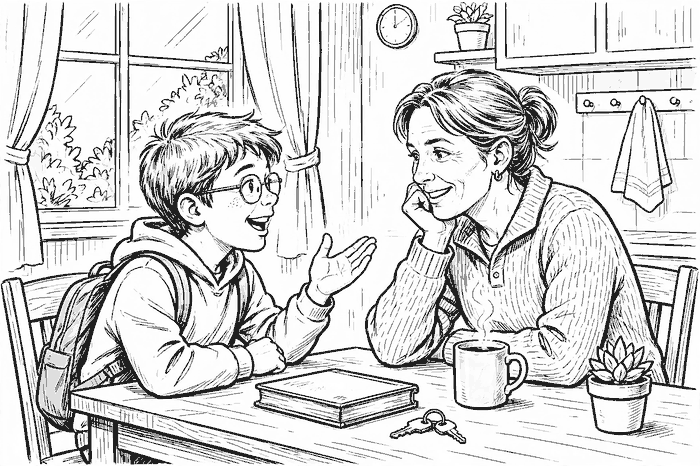
“Did you use AI?” is the wrong question now; the answer is almost always yes, and it tells you nothing. The question that matters is: “Could you do it again without it?” If the answer is yes, AI was a tutor and everything is fine. If the answer is no, the homework was a performance, and the exam will eventually ask for the real thing.
Grades measure what got handed in. Exams measure what stayed. Build the routine around the second one, and the first one takes care of itself.
Sources
- HP Futures 2026 report (6,000+ students surveyed, 758 in India) — 82% of Indian students worried AI trades speed for deep learning; 42% reach for printed materials or handwritten notes for retention; 17% prefer AI summaries.
- 30-scientist consensus report on generative AI and student thinking (65 processes rated, consensus on 42) — clearest gains in tutoring, practice questions, and instant feedback.
- Study of 26,811 students in grades 7–12 on homework scores (+18%), homework time (−30%), and closed-book exam scores (−20%).
Free newsletter
Get guides like this in your inbox
Practical AI for parents, teachers, and everyday people. Copy-paste ready. Always free.